
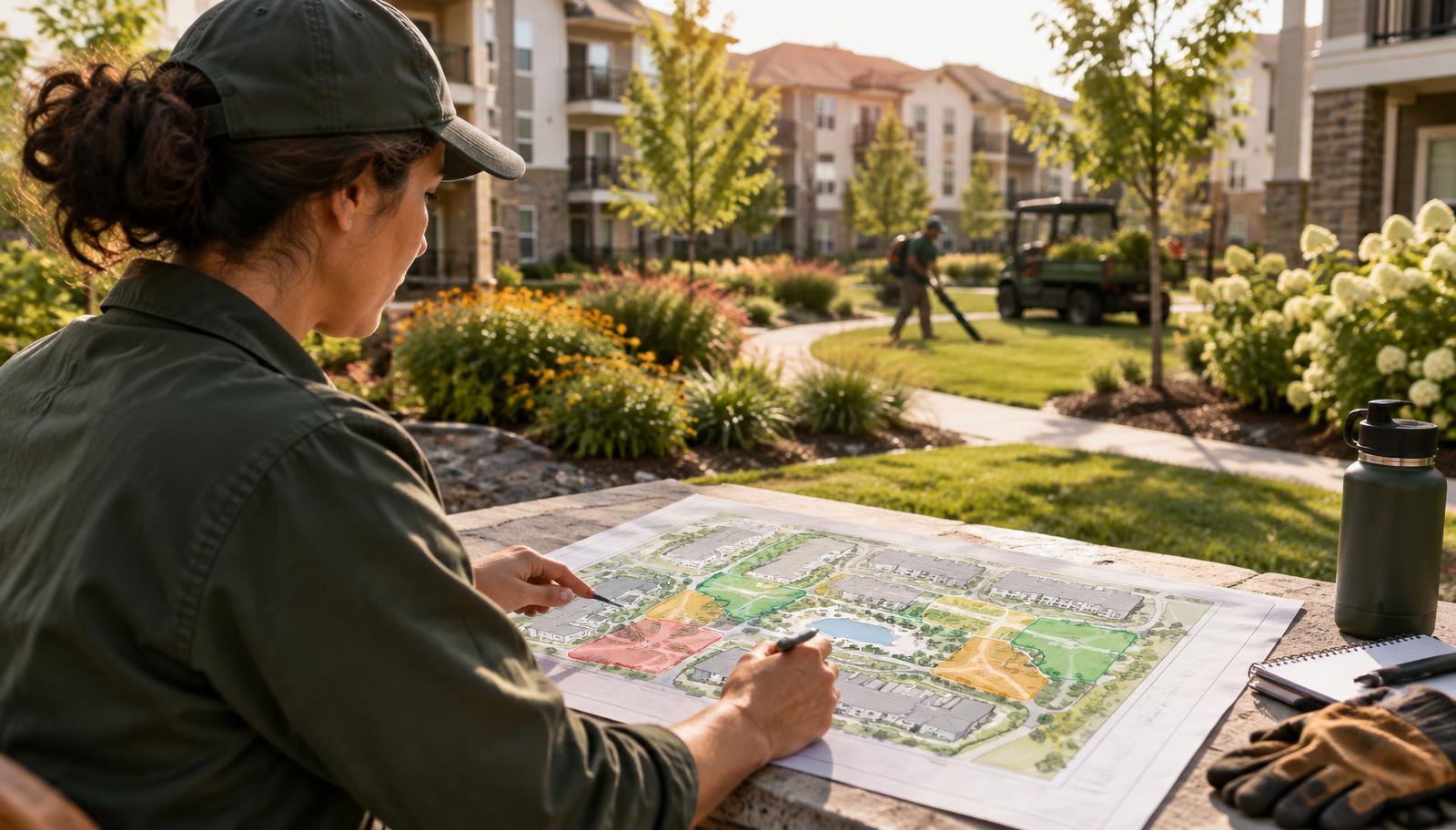
Apartment complex landscaping works best when it is managed as an operating system, not a collection of mowing visits. Divide the property into service zones, define the appearance and safety standard for each zone, build work around resident activity and seasonal conditions, and document what the crew completed.
For a property manager, the goal is a clean, usable exterior that supports leasing, resident access, and predictable maintenance. For a landscaping company, the goal is a scope that crews can execute consistently without relying on assumptions made during the bid walk.
Start with a site plan, not a generic service list
Every multifamily property has different traffic patterns, plant material, irrigation needs, access constraints, and resident expectations. A standard mow-blow-go scope may cover some lawn areas, but it rarely defines the full work required to maintain a complex.
Before setting a schedule or pricing a contract, walk the property and create a simple site plan. It does not need to be a formal landscape design drawing. A marked aerial image or property map can be enough if it identifies service areas and site conditions.
Document:
- Building entrances, leasing office areas, mailrooms, pools, playgrounds, dog areas, and other high-visibility spaces
- Turf areas, planting beds, tree zones, groundcover, hardscape, and drainage features
- Slopes, narrow access points, parked-car exposure, gates, and locations where equipment use is limited
- Irrigation controllers, visible leaks, damaged heads, and areas that receive too much or too little water
- Waste enclosures, pet-waste stations, signage, lighting, retaining walls, and other features that affect crew access
- Existing hazards, dead plant material, trip hazards, low branches, standing water, or obstructed walks
- Areas maintained by the property, residents, an HOA, a separate vendor, or the municipality
Assign each part of the property to a zone, such as entry, residential building perimeter, amenity area, parking perimeter, detention or drainage area, and back-of-house. Zones make it easier to set service frequencies, plan labor, inspect quality, and identify what is excluded from the contract.
Set different standards for high-visibility and low-traffic areas
Not every area needs the same level of detail every visit. The leasing entrance and pool approach may need closer attention than a remote fence line. Treating all areas identically can either raise costs unnecessarily or leave the most visible locations below standard.
A useful apartment complex landscaping plan separates zones by service priority:
| Zone | Typical priority | What to define |
|---|---|---|
| Leasing office and main entrance | High | Edging, litter removal, bed appearance, pruning clearance, seasonal color if included |
| Building entries and mail areas | High | Safe walk access, trimmed plants, clean curbs, no overgrowth at signs or lights |
| Pool, clubhouse, playground, and dog areas | High | Mowing and debris timing, access restrictions, sightlines, cleanup around amenities |
| Interior lawns and common greens | Medium | Turf height, edging frequency, litter pickup, irrigation observations |
| Parking edges and building perimeters | Medium | Weed control approach, litter, low branches, curb lines, equipment restrictions |
| Fence lines, utility areas, and remote boundaries | Lower | Periodic mowing, brush control, access limitations, debris removal expectations |
The standard should be observable. “Keep property looking good” is subjective. “Keep walks, entrances, curbs, and signage clear of plant overgrowth; remove routine landscape debris during each scheduled visit” gives the crew and property manager a clearer basis for inspection.
Build a complete grounds maintenance scope
Grounds maintenance is the recurring work required to keep the exterior areas orderly, accessible, and in working condition. It usually includes landscaping work, but it can also require coordination with irrigation, waste, maintenance, and snow removal providers.
A complete scope states what is included, how often it occurs, and who is responsible for exceptions. It should also distinguish recurring maintenance from enhancement work.
Recurring landscape maintenance
Recurring work may include:
- Mowing turf at an agreed seasonal frequency
- Trimming and edging where appropriate
- Blowing or removing clippings and routine landscape debris from hard surfaces
- Collecting visible litter in maintained landscape areas
- Weeding beds, tree rings, hardscape joints, or curb lines, using the method defined in the agreement
- Pruning shrubs and groundcover to maintain clearance from paths, windows, signs, lighting, and structures
- Monitoring plant health and reporting obvious decline, damage, pests, or irrigation concerns
- Removing small, routine debris caused by normal site conditions
Do not assume that “landscape maintenance” includes every exterior task. Leaf removal, mulch installation, plant replacement, storm cleanup, tree work, irrigation repairs, pressure washing, pond care, and hauling large debris should be addressed specifically.
Seasonal and periodic work
Some work belongs on a calendar rather than in every visit. Examples include bed cleanup, mulch installation, seasonal planting, shrub reduction, leaf management, irrigation startup or winterization, and storm preparation.
The actual timing depends on the property’s climate, plant palette, and local site conditions. Define the outcome and approval process rather than promising a date that weather may make impractical. For example, specify that seasonal bed cleanup occurs within an agreed service window, subject to weather and site access.
If fall work is part of the offering, a separate service plan can help define labor, debris handling, and visit timing. See How to Build and Deliver Fall Landscaping Services for a practical framework.
Snow removal and ice management
In areas with winter weather, snow removal should be planned as a separate operational service, even when the same contractor performs landscaping in warmer months. The scope should identify trigger conditions, priority routes, service areas, material handling, access constraints, and communication procedures.
At a minimum, clarify responsibility for:
- Primary walkways, accessible routes, building entries, stairs, ramps, and amenity access
- Parking lots, drive aisles, fire lanes, loading areas, and mailbox areas
- Relocation or stacking locations for snow, where relevant
- Ice-treatment materials and any areas where materials should not be used
- Resident vehicles, parked-car access, gates, and after-hours site entry
- Notifications to the property manager before, during, or after weather events
Avoid treating snow work as an informal add-on to a summer landscape agreement. It requires its own site review, response plan, records, and pricing structure.
Plan the work around residents and property operations
An apartment community is an active living environment, not an empty commercial site. Crews work around parked vehicles, pedestrians, pets, move-ins, deliveries, maintenance staff, and resident complaints. The service plan should account for those realities before the first visit.
Set practical operating rules with the property manager, including:
- Approved service days and working hours
- Entry instructions, gate codes, and onsite points of contact
- Areas that cannot be serviced during certain hours, such as pool decks or leasing events
- Rules for blowing debris near open windows, outdoor dining areas, vehicles, and occupied patios
- Equipment routes that avoid pedestrian-heavy paths when possible
- Procedures for abandoned items, hazardous waste, broken glass, animal remains, or suspected utility issues
- How crews should handle resident questions or requests outside the written scope
A foreperson should know when to stop work and notify management. Examples include a broken irrigation line, a fallen limb affecting access, a damaged fence, an unsafe tree condition, standing water near a building, or an area blocked by construction. The right response is not to improvise a major repair during a routine visit; it is to make the condition visible, document it, and obtain direction.
Design for maintainability before adding features
A landscape can look appealing at installation and still be difficult to maintain year after year. On an apartment property, the best design choices are often the ones that make routine work clearer, safer, and less disruptive.
When planning upgrades or renovations, consider:
- Plant placement: Keep mature plant size in mind near entrances, walkways, windows, signs, lighting, building equipment, and utility access.
- Bed edges: Use clear edges and manageable bed shapes so crews can mow and trim without repeated handwork in every corner.
- Turf use: Avoid placing turf in spaces that are difficult to mow safely or routinely damaged by foot traffic, shade, drainage, or vehicle movement.
- Irrigation access: Make controllers, valves, heads, and shutoffs reachable for inspection and repair.
- Drainage: Keep mulch, plants, and edging from blocking drainage paths or directing water toward buildings.
- Amenity areas: Choose materials that tolerate the actual activity in the area, whether it is pet use, play, pool traffic, grilling, or outdoor gatherings.
- Shade and exposure: Review how buildings, trees, and hardscape affect sun, wind, and water needs before selecting plant material.
Landscape placement can also affect building comfort. The U.S. Department of Energy discusses the use of vegetation for shade and wind protection in its guide to energy-efficient landscaping. For a multifamily property, any planting plan should still be reviewed for site-specific maintenance, visibility, drainage, and building-access needs.
Use a property-specific visit checklist
A crew checklist turns the contract scope into field instructions. It reduces missed details when staffing changes, the site is large, or multiple crews share the property.
A useful checklist is short enough to use on every visit and specific enough to reveal exceptions. It can be completed on paper, in a mobile app, or in a work-order system.
Example recurring-visit checklist
Before work
- Check for management messages, events, access restrictions, and weather issues.
- Walk or drive the high-priority areas first.
- Identify hazards, blocked access, fallen limbs, irrigation leaks, or damaged property.
- Confirm which work is scheduled for this visit.
During work
- Service turf and beds in the assigned zones.
- Keep clippings and debris off walks, drives, entries, and parked vehicles.
- Maintain clearance at paths, signs, lights, windows, and building entrances.
- Check high-visibility beds and amenity areas before leaving the zone.
- Photograph material damage, safety concerns, plant decline, or out-of-scope conditions.
Before departure
- Inspect the leasing office, main entrance, and primary pedestrian routes.
- Verify gates are secured and equipment has been removed from common areas.
- Record work completed, areas skipped, and reasons for any skipped work.
- Send a concise exception report to the designated contact when needed.
The checklist should not become a substitute for supervision. A foreperson or account manager should still conduct periodic, unannounced quality reviews against the agreed property standard.
Separate routine maintenance from enhancements and repairs
Many disputes in apartment complex landscaping arise when a recurring contract is expected to cover renovation-level work. The solution is a clear boundary between maintenance, enhancements, repairs, and emergency response.
Routine maintenance keeps existing landscape areas in their intended condition. It generally includes scheduled mowing, trimming, cleanup, and defined bed care.
Enhancements improve, replace, or add to the landscape. Examples include installing plants, changing bed layouts, adding mulch, refreshing seasonal displays, replacing damaged sod, or installing decorative features.
Repairs restore a system or feature that is not functioning as intended. Irrigation leaks, controller failures, damaged edging, broken drains, and failed lighting may require separate approval and specialized work.
Emergency work addresses conditions that require an immediate response, such as access blocked by debris or a storm-damaged limb. The agreement should define who can authorize this work, how the contractor will communicate, and how it will be documented.
For every extra-work request, use a written process: identify the location and problem, describe the proposed work, state what is excluded, obtain approval, then document completion. This protects both the property and the service provider from scope drift.
Manage irrigation as an ongoing observation task
Landscaping crews may not be responsible for irrigation repairs, but they are often the first people to notice visible problems. Build irrigation observations into the maintenance process instead of waiting for a resident complaint or turf decline.
During visits, crews can note visible leaks, broken heads, overspray onto walks or buildings, dry zones, pooling water, damaged controllers, and areas where mowing or trimming repeatedly exposes irrigation components. The report should identify the location and include a photo when helpful.
Do not require a landscape crew to diagnose every irrigation issue from appearance alone. Report the condition, notify the responsible party, and confirm whether the crew should protect the area, adjust its work, or return after a repair.
Create an inspection and communication rhythm
A regular inspection rhythm keeps small issues from becoming recurring complaints. It also gives property managers a clear way to prioritize work instead of communicating only when something goes wrong.
A practical rhythm may include:
- Each visit: crew completion note and exception report
- Monthly or as agreed: site walk focused on appearance, plant condition, irrigation observations, safety concerns, and pending enhancements
- Seasonally: review of service frequency, weather-related needs, plant performance, leaf strategy, snow plan, and budgeted improvements
Keep reports simple. A useful report includes the date, areas serviced, open issues, photos where needed, recommended next actions, and any approvals required. Long reports that do not identify a decision or action are less useful than a short, consistent record.
Property managers should designate one primary operational contact and one backup. Landscaping providers should likewise identify who can approve changes, receive emergency notices, and answer onsite questions. Clear contacts prevent crews from taking direction from multiple people with conflicting expectations.
Questions to ask before hiring or bidding apartment landscaping
The right questions uncover scope gaps before they become costly. Whether you manage the property or provide the service, confirm the following during the site review:
- Which areas are included, and which areas are maintained by someone else?
- What should the property look like at the entrance, amenities, building entries, and back-of-house areas?
- What service frequency is expected by season?
- Which tasks are included in the recurring price, and which require separate approval?
- How will leaf removal, storm debris, mulch, pruning, plant replacement, and irrigation repairs be handled?
- Are there gate codes, restricted hours, parking issues, pet areas, or events that affect service?
- Who receives visit reports and can approve additional work?
- What documentation is needed for skipped work, property damage, irrigation issues, or safety concerns?
- Is snow removal part of the arrangement, and if so, what are the priorities and response procedures?
- When will the parties review performance and update the scope?
Build a service menu that fits multifamily work
Landscaping companies that serve apartments often need more than a residential mowing package and less than a fully customized commercial contract for every site. A defined service menu helps sales staff scope work consistently while allowing each property to add the services it needs.
Possible categories include recurring grounds maintenance, bed care, seasonal cleanup, mulch and plant installation, irrigation inspection or repair coordination, enhancement projects, debris response, and snow removal. The specific menu should match the company’s equipment, staffing, expertise, and local operating conditions.
For ideas on structuring a broader offering without making every service an automatic inclusion, see 16 Lawn Care Business Ideas to Build a Practical Service Menu.
The operating principle to keep
Apartment complex landscaping succeeds when the work is visible, the scope is specific, and exceptions are communicated promptly. Start with a mapped property, maintain different standards by zone, keep recurring work separate from enhancements and repairs, and give crews a checklist they can follow without guessing. That creates a more manageable property for the client and a more controllable service operation for the contractor.